
Christmas Meta Ads Campaign:
Character Battle
Concept Background: Taking a break from Christmas
When people scroll through social media, they are often looking for an escape; a pause from their daily reality. I wanted to market the Christmas Wallpaper Pack by mirroring that user behavior. If humans use their phones to take a break, why shouldn’t holiday icons do the same? The campaign concept, "Even [Character] Needs a Break," humanizes mythical Christmas figures. It positions the phone (and by extension, the wallpaper product) as a sanctuary from the chaos of the holidays.
Objective: Maximize traffic, brand awareness, and learn about target audience
With a limited budget of $50, optimizing for conversions (sales) would likely result in near-zero data due to high CPMs during Q4. Instead, I chose a Traffic Objective to run a "Creative Battle." By splitting the budget across 5 distinct characters, I could treat this as an A/B/C/D/E test to see which visual narrative stopped the scroll most effectively and what users were most interested.
Tools Used:
Midjourney, Nano Banana, Canva, Meta Ads Manager
The AI Workflow

1. Scene Generation
(Midjourney)
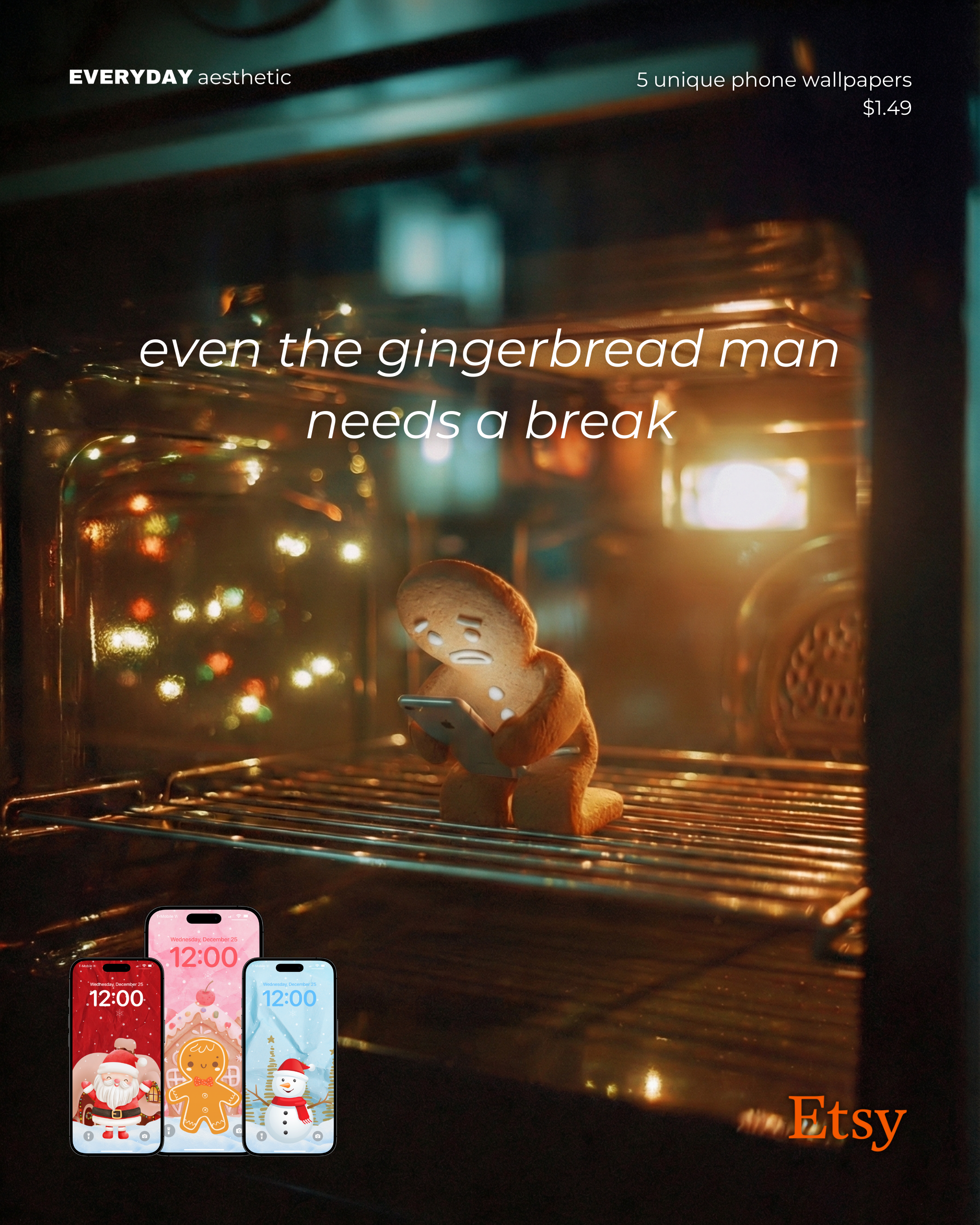
I prompted specific environments and scenes for each character (e.g., “Santa sitting on a rooftop,” "Rudolph outside a circus tent," "Gingerbread man inside an oven").

2. Adding Extra Details
(Nano Banana)
Using Nano Banana, I modified the source images to insert smartphones into the characters' hands, ensuring the lighting and grip looked natural. I also added small details, such as more Christmas lights.

3. Composite & Layout
(Canva)
Final light color grading, typography, and logo placement were handled in Canva to ensure brand consistency across all ads.
Creative Execution
Santa Claus
Visual: Santa sitting on a roof near a chimney, backlit by a winter night and endless houses.
Narrative: Taking a break from delivering millions of presents.
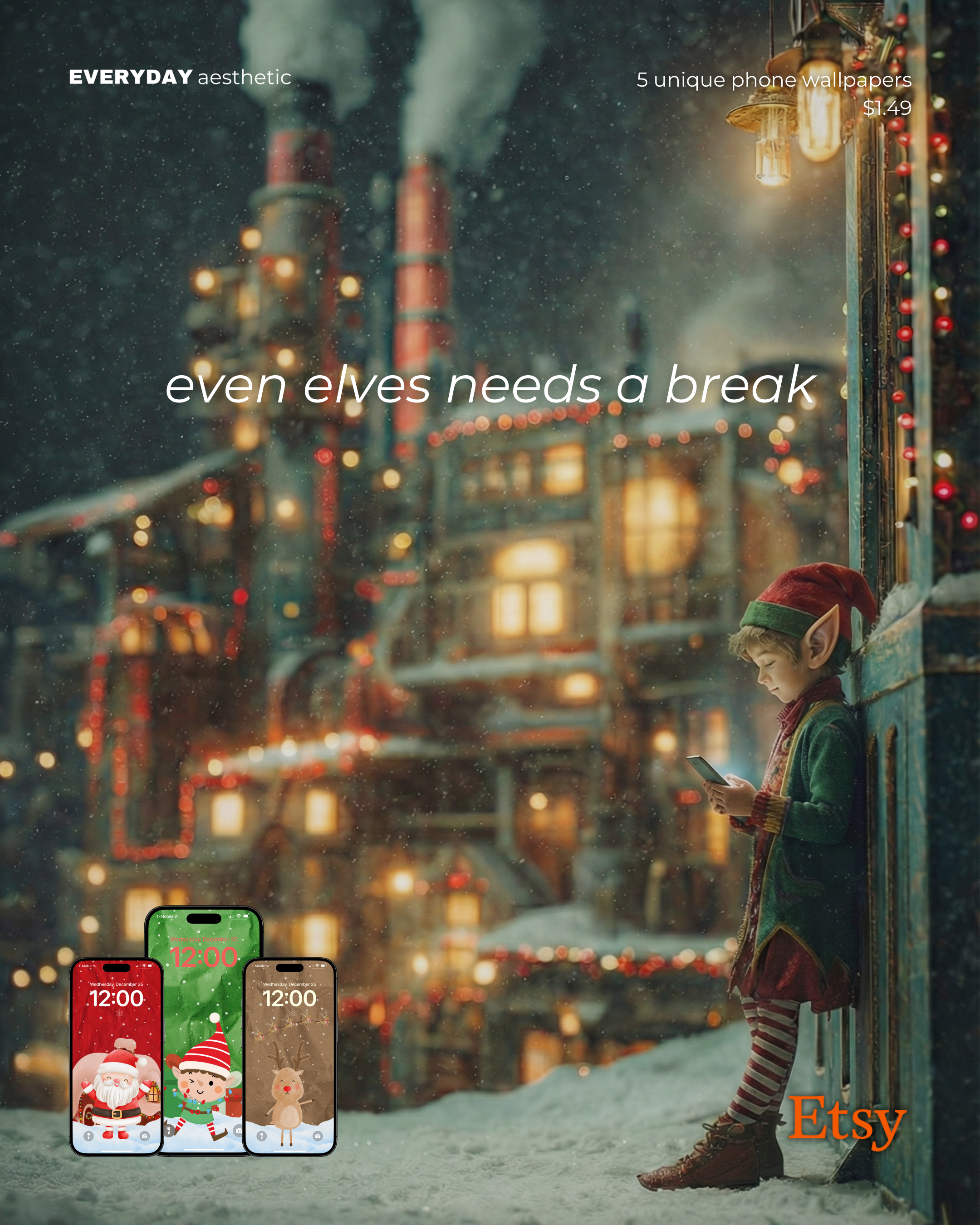
Elf
Visual: An elf leaning against a wall outside of a large industrial-like toy factory.
Narrative: Stepping out for a "smoke break" (replaced by a phone break) from the assembly line.

Rudolph
Visual: Rudolph standing outside a massive, crowded Christmas circus tent.
Narrative: Overwhelmed by the crowd and the fame, he steps outside for quiet time.
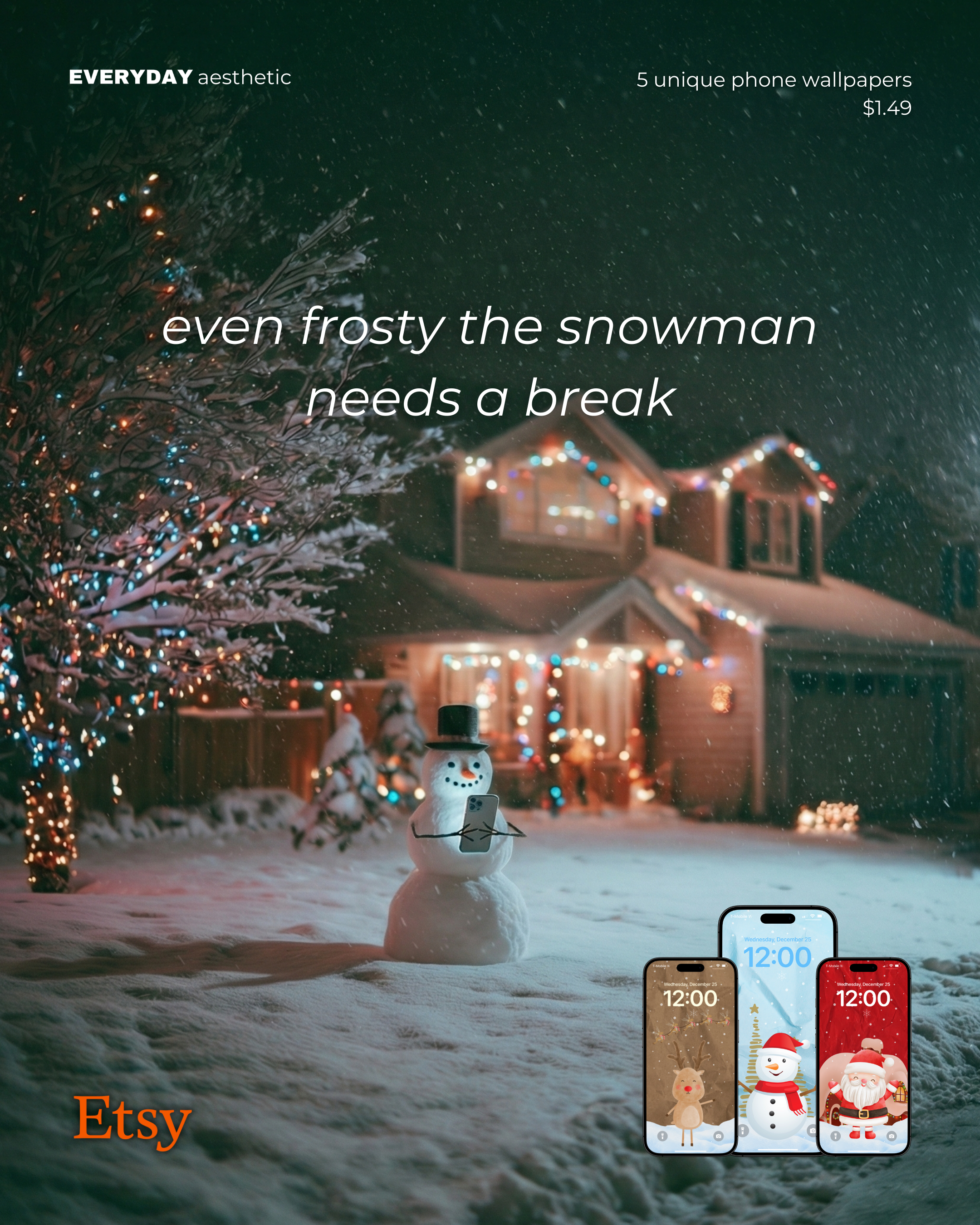
Snowman
Visual: A snowman in a front yard, breaking his "pose" to check notifications.
Narrative: Tired of just standing there being decorative.
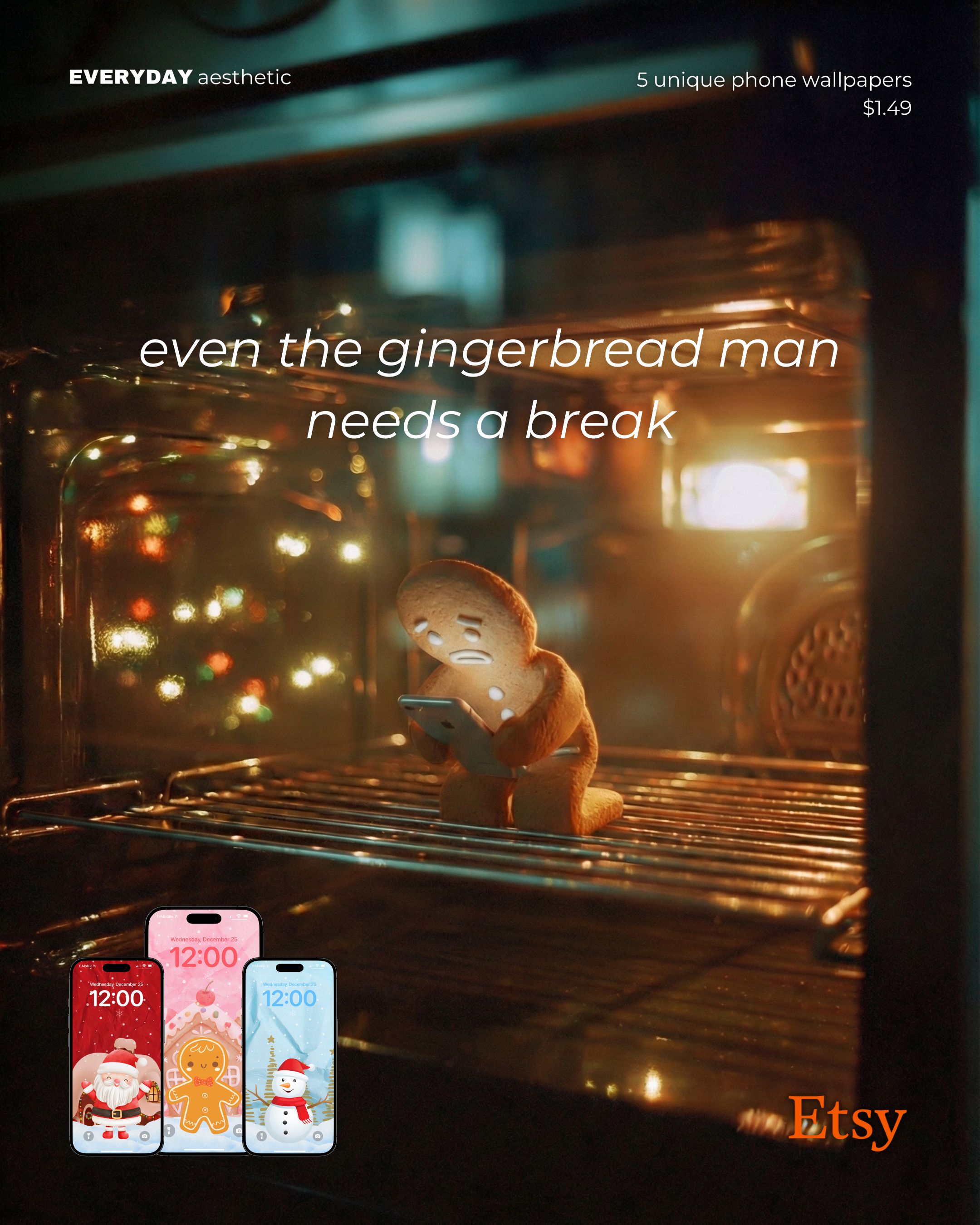
Gingerbread Man
Visual: A gingerbread man cookie sitting inside a lit oven, scrolling on his phone while baking.
Narrative: He needs a break even while facing his destiny of being eaten.
Results & Key Learnings
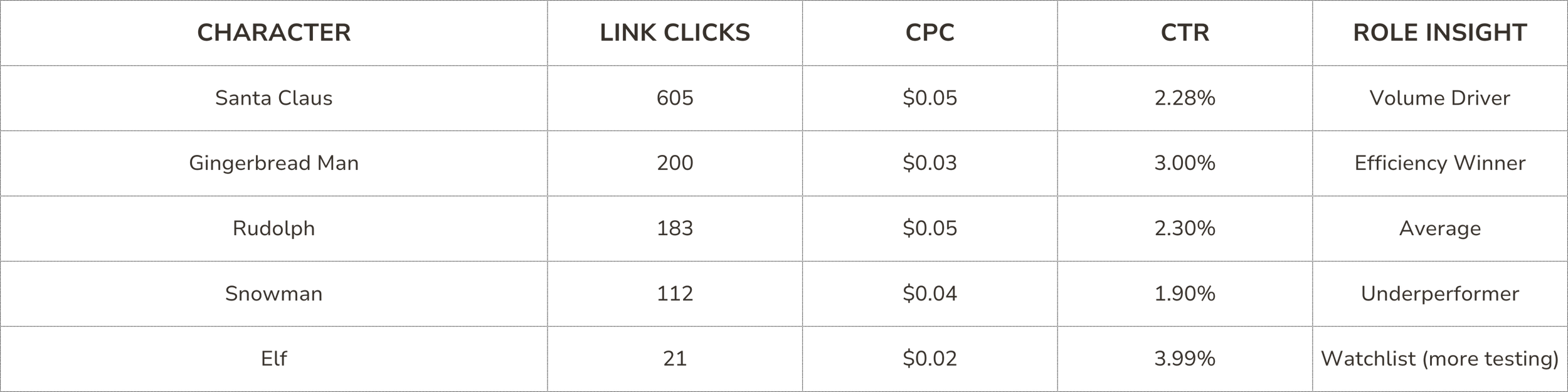
1st Place: Gingerbread Man
Efficiency Winner
The Gingerbread Man had the 2nd highest CTR along with the 2nd lowest CPC, suggesting that absurdist humor resonates better with my target audience than traditional cozy imagery (Santa).

2nd Place: Santa Claus
Traffic Driver
Santa was Meta’s algorithm favorite, consuming the most budget and getting the most clicks. Though the CTR was on the higher end, the CPC was the most expensive.
3rd Place: Elf
Future Testing
The Elf had the best metrics with the highest CTR (3.99%) and lowest CPC ($0.02). It’s not the winner though because the volume is too low and it is unknown how the metrics would hold up with a higher spend. It could use more testing.
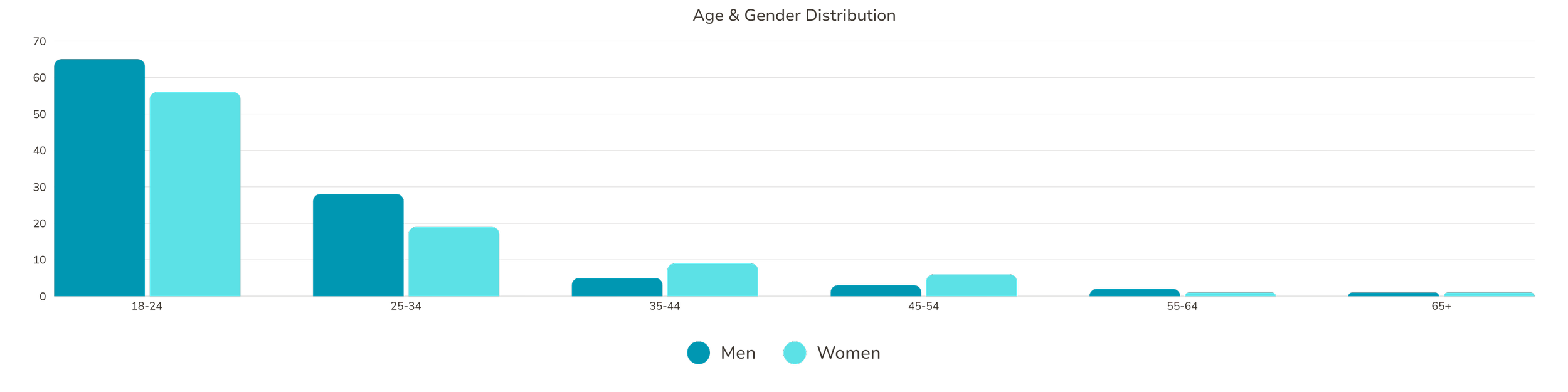
The Christmas Character ad sets resonated primarily with a Gen Z audience, with the 18–24 age bracket driving the majority of traffic.
Most notably, the data reveals a male skew in the 18–34 demographic. While historical sales data indicates that men typically comprise only 15–20% of the customer base, these ads saw men out-engaging women in the top two age groups. This suggests that shifting from general 'soft' aesthetics to bolder character-driven visuals successfully captured a male audience that the standard EVERYDAY creative usually misses.
Strategic Takeaway
Now that this 'bold' style is proven to grab male attention, I can capitalize on it by framing the product ads as 'Gifts for Her' or introducing neutral/masculine wallpaper designs to turn that attention into conversions. Conversely, since women drive the bulk of actual revenue but engaged less here, returning to softer, traditional aesthetic ads will be key to re-engaging and capturing the primary female purchasing demographic.